April Reading

Wednesday, April 30, 2008

Stories

  • "Ysreal" by Junot Diaz
  • "Betrayal" by Patricia Duncker
  • "God's Goodness" by Marjorie Kemper
  • "Greasy Lake" by T. Coraghessan Boyle
  • "Material" by Alice Munro
  • Alligator Dance by Janet Peery

Novels
  • Lamb: The Gospel According to Biff, Christ's Childhood Pal by Christopher Moore

Notable Nonfiction
  • Slouching Towards Bethlehem by Joan Didion
  • The Glass Castle by Jeannette Walls
  • Vintage Baldwin by James Baldwin

Hibernating
  • Going After Cacciato by Tim O'Brien
  • Little Black Book of Stories by A.S. Byatt
  • The Book Thief by Markus Zusak
I did lots of reading this month, but not all of it got finished. A word about hibernating books: I have a 50 page rule. If I'm not enjoying a book or getting something out if it in 50 pages, I give up. I used to never give up on books. I used to force myself to get through anything, but that lead to a lot of slow and unpleasant reading. Thus, the 50 page rule was born.

Book raves for the month include Alligator Dance, which I still cannot coherently talk about, and Slouching Towards Bethlehem.

Book Rave: Alligator Dance

Monday, April 28, 2008

Remember how last week I was all, "literary stories suck... wah wah wah?" Forget I said anything.

I just finished Janet Peery's short story collection, Alligator Dance. I am in awe. It's an amazing collection of traditional short fiction. The writing is superb. The stories are superb. (You see why I don't write reviews.)

But what I find even more amazing is that almost no one seems to have read this book. It has all of four Good Reads reviews and three Amazon reviews. This officially qualifies it as the best book you aren't reading.

Go read it.

/End Whining

Wednesday, April 23, 2008

Apologies for the temper tantrum in the last post. Lately a lot of the MFA stuff has come back to haunt me. That's the thing about returning being a full-time writer. You get to live the dream, but you get all the nightmares along with it.

Speaking of nightmares, I may go silent for the rest of the week as I'm working on revising the last story I wrote. There are some major overhauls ahead and I have a feeling I should be concentrating on that and not buying and selling my friends on Facebook. (Thank you, hujhax.)

In other addiction news, Hubs brought home SingStar Rocks last night. We got SingStar 80s on a whim a couple of weeks ago and I feel a new addiction being born. I can totally rock 99 Red Balloons. Maybe if the writing thing doesn't work out I can be an 80s pop star. . .

Wrestling with the Real Writers

Monday, April 21, 2008

My productivity last week centered on typing the first draft of a story I wrote last month. I write longhand. My very first writing teacher said that was a huge waste of time and thus began a long string of advice from writing teachers that I have ignored.

For me, writing longhand is soothing. There's something about putting pen to paper that allows me to shut off the editorial noises in my head and just write. Typing is for revising and editing. But most importantly, notebooks do not have the Internet and so I can't click off my story and onto Facebook or Good Reads or chat or any of the other million ways the Internet tempts me to not write.

It's probably a good thing that most of my work is taken up by mere typing because last week kind of sucked as far as creativity goes. It seems I have some demons to deal with and I've been facing them pretty much anytime I sit down to write.

My MFA program cultivated a certain amount of elitism amongst its writers. Between the 40 or so of us in the fiction program, there were unspoken guidelines about what made you a "real" writer[1] as opposed to someone who would leave their MFA and go work in technical writing for the rest of their lives. (Since I have already lost my "real" writer status by doing just that, you'd think I have nothing else to lose.) Real writers, for instance, wrote literary stories. They were usually about drugs and sex and parents and death. The stories were edgy, sometimes violent, and usually involved taking drugs at 12, midgets, monkeys, and other extraordinary elements. They read Borges and Lovecraft and nothing else published after 1975. They didn't come to readings because they were too busy writing (or thinking about writing while down at the bar). Generally, a lot of the stuff they wrote was very good.

If you didn't fall into this category, they didn't quite know what to do with you. When I started the program, I tried desperately to fit into this category. But I developed my love for reading and writing through contemporary fiction and (cough, cough) chick lit. I didn't grow up with drugs or violence and the story I most enjoyed writing was the anti-love story. In the autumn of my first year of the program, one of the "real" writers who was in her last year at the program suggested I look into romance writing. She did so after she'd sat in on one of my workshops and in a tone that left no question about how little she thought of my work.

I went home, cried for a little while, read through my New Yorkers and Best Americans and resolved to write a better workshop story. I don't think I ever earned the approval of my peers, but I improved my sentences and my characters. I became a better writer, even if what I was writing wasn't what I loved. In the end, I liked the stories I was writing and I thought I was doing a pretty good job at them.

And now? I was at a reading a few months ago for the winner of a local short story contest. As the first place winner read, I grew increasingly annoyed. There was the down-and-out protagonist. There were the drugs. There was the fantastical event that existed more in obscure imagery than in clarity. It wasn't a bad story, it was just the exact same story that I'd spent three years reading in the program. And the epiphany here is more about me than about the story I was hearing: I am simply not interested in the literary genre anymore.

The struggle comes, though, that literary writing is pretty much all I've ever known. Prior to the MFA, I had three stories in my name, one of which, I still work on from time to time. I'm having a hard time letting go of what I should be writing and focusing on what I want to write. Of course, the minute I start thinking about what I want to write, I find myself drowning in my own prejudices and elitism.

I'm starting small, but I'm changing that. Last night at the bookstore I bought a couple of books that looked good. They aren't on any literary lists. They will probably not win any major awards. But dammit, I'm going to start reading what I enjoy again. With any luck, it won't be a long path back to what I enjoy writing.

___________________
[1] For the record, I hate the term real writer. Do you write? Then you're a writer. I have no idea what qualifies you to be real.
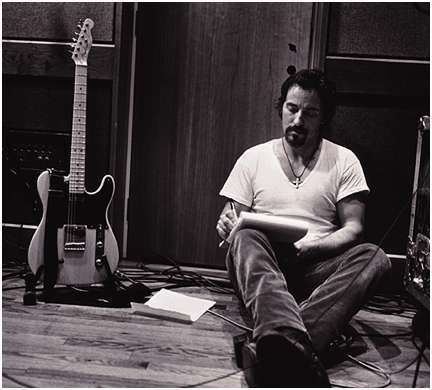
Copycat

Wednesday, April 16, 2008

I'm reading Joan Didion's Slouching Towards Bethlehem right now. By reading, I mean I'm devouring every sentence and every word. I love her style.

On a similar note, I've been thinking a lot about reading for language and style vs. reading for story and character. I think there's value to both. My mind defaults to reading for story and character more so than language and, unless the writing really catches my attention (as Didion's does), I usually have to remind myself to look closer at the language in the prose I read.

One of the teachers in grad school suggested that we hand write passages or entire stories that we liked to get a sense for the style of the piece. It was not enough to simply read it, he said. He encouraged us to get a feel for the cadence of writing the story. In a notebook somewhere I have entire handwritten copies of "How to Talk To a Hunter," "Lust," and "Sonny's Blues." It may sound like busy work. I recall one of my classmates rolling his eyes and arguing that he barely had enough time to write his own stories, let alone someone else's. But I had enough time. And I'd argue that I became a better writer for it because it made me pay very close attention to language in a way that I didn't when I was reading.

I came across a great quote by Julie Kramer that may speak to this: "If authors have to write half a million words before they get published, I'd venture that they have to read ten million." The next time you read something really outstanding, try pulling out your notebook and copying a paragraph or two. If you're really ambitious spend some time re-writing your favorite story. See if it doesn't draw your attention to the finer details of the prose.

Tramps Like Us, Baby We Were Born to Run

Monday, April 14, 2008

Hubs and I are back from the Springsteen concert, but the fangirl in me has yet to stop squealing long enough to let me compose a coherent thought. Lowlights and highlights it is.

Lowlights:

  • Hubs and I have the uncanny ability to attract loud people who talk about nothing. In line, we were behind the loud people bantering over the weather. In our seats, we were in front of the loud person who described every single section of the arena that he had sat in. And finally, just before the show started, we were in front of the couple discussing when their next sex night would be. Lovely.
  • I-35 between Dallas and Waxahatchie. WTH, people? Can you not pave a road?

Highlights:
  • Staying at the Hyatt Summerfield Suites for the win. Walked three blocks to the American Airlines center.
  • The band. The only other time I've seen Springsteen was for the acoustic Devils & Dust tour, which, while amazing, had a very somber feel. This concert was more of a party. The energy was high and it was great to see Bruce and the band having so much fun.
  • Hearing "Jungleland," "Born to Run," and "Dancing in the Dark" live.
  • The man in full cowboy regalia that rocked out to every. single. song. He was having a great time and didn't care who knew it.
  • Jon Bon Jovi joining Springsteen on stage for Glory Days. There are no words. None. Just gleeful fangirlish screaming.
More when the squealing in my head subsides.

The Springsteen Reader: Songs

Sunday, April 13, 2008


"We cut Greetings in three weeks. But Clive [Davis] handed it back and said there was nothing that could be played on the radio. I'm glad he did; I went home and wrote "Blinded by the Light" and "Spirit in the Night." With the previously missing Clarence Clemons on the saxophone, these songs were recorded, and the record was finished.

"I never wrote in that style again. Once the record was released, I heard all the "new Dylan" comparisons, so I steered away from it. But the lyrics and spirit of Greetings came from a very unselfconscious place. Your early songs come out of a moment when you're writing with no sure prospect of ever being heard. Up until then, it's just you and your music. That only happens once."

~~from Songs by Bruce Springsteen